Property Tax Records give homeowners a clear snapshot of what is owed, when payments were made, and if any liens exist. By pulling the unpaid property tax list or checking tax delinquency records online, you can spot overdue balances before a tax foreclosure listing appears. A quick tax lien search by address and a review of assessors office public records also reveal exemption eligibility and any historic property tax payments.
Finding a specific parcel is simple when you use the tax roll database access combined with a tax parcel map view. The platform also offers a property tax rate calculator to estimate current charges, and property tax payment history verification lets you confirm amounts paid versus the total tax due. If discrepancies appear, tax assessment appeals information and the property tax notice explanation guide you through corrections.
How to Search Property Tax Records
Lucas County property tax records connect a parcel with its assessed value, tax charges, posted payments, and unpaid balance. A parcel-number or owner search helps confirm a tax bill including verified lucas county oh resources and review an installment, or verify payment history The Treasurer’s tax account answers tax questions; deeds, recorded mortgages, and court foreclosure filings belong to other offices. Use each official record for the question it can settle.
Official Search Portal: https://www.lucascountytreasurer.org/
Steps to Search
- Open the Lucas County Treasurer site and choose the property tax search or tax bill function shown for parcel lookups.
- Enter the parcel number from the tax notice or bill. If that number is not available, use an owner name or situs address in the matching fields provided by the search screen.
- Select the parcel and tax year, then review the account summary for assessed value, taxable value, charges, payments, and remaining balance.
- Open the bill or payment-history view to confirm due dates, posted transactions, and any prior-year balance.
- Use the official site’s contact route for a correction, refund review, or a record the search cannot display.
What Property Tax Records Show
A tax record has a limited purpose. It describes the parcel for a particular tax year and shows how the taxing offices assessed and billed that property. A tax account should not be treated as a full title report because it may not list every mortgage, easement, judgment, or other recorded claim.
An unpaid-tax search can identify a tax delinquency that may lead to collection action. That result alone does not prove that a private lien has been filed. Buyers, lenders, and property owners who need title status should obtain a separate title examination from a title company or consult the Lucas County Recorder.
Property Tax Assessment
The Lucas County Auditor establishes property values for taxation, while the Treasurer uses those values to prepare and collect tax charges. Assessment records separate the value of the land from the value of structures and other improvements. This distinction helps readers understand why the total assessed value does not equal the taxable value used for every tax calculation.
Property Assessment Date
The assessment date shown on a record identifies the valuation date used for that tax year. It does not represent the date a property was purchased, transferred, or placed on the market. A recent sale may be reviewed by the Auditor, yet the tax account can still reflect the county’s established assessment until the next valuation or an appeal changes it.
Land Assessment
Land assessment covers the value of the underlying site rather than the buildings on it. Location, lot features, access, and recorded plat information can affect this value. For a business property, the land and improvements may carry separate figures, which makes the land figure useful when comparing the parcel with another property in the same area.
Improvement Assessment
Improvement assessment covers the value of the built features on the parcel. A new structure, addition, garage, or major change can affect this figure after the Auditor reviews the property. A porch, roof, or other repair may have a different effect because the taxable value can change only when it affects the assessed property value.
Total Assessed Value
The total assessed value combines the land and improvement values shown on the assessment record. It is a basis for taxation, not the amount of tax owed. Tax rates apply to the taxable value after legally recognized adjustments, and credits or exemptions may reduce the resulting charges. A property with a high assessed value can owe less tax than expected if reductions apply.
Taxable Value After Adjustments
Taxable value is the amount to which the applicable tax rates are applied after assessment adjustments, exclusions, or exemptions. The tax bill should connect the taxable value to the listed rates and charges. If the taxable value differs from the total assessed value, check for an exemption line, partial exemption, valuation adjustment, or other item applied by the Auditor.
Assessment Changes
Assessment values can change through a county reappraisal, a recent sale, a property improvement, a transfer, or a valuation complaint. The record’s last-updated date can help show when a change was entered. A person who disputes the value must use the formal valuation complaint or appeal process rather than ask the Treasurer to rewrite the Auditor’s assessment record.
Property Tax Charges
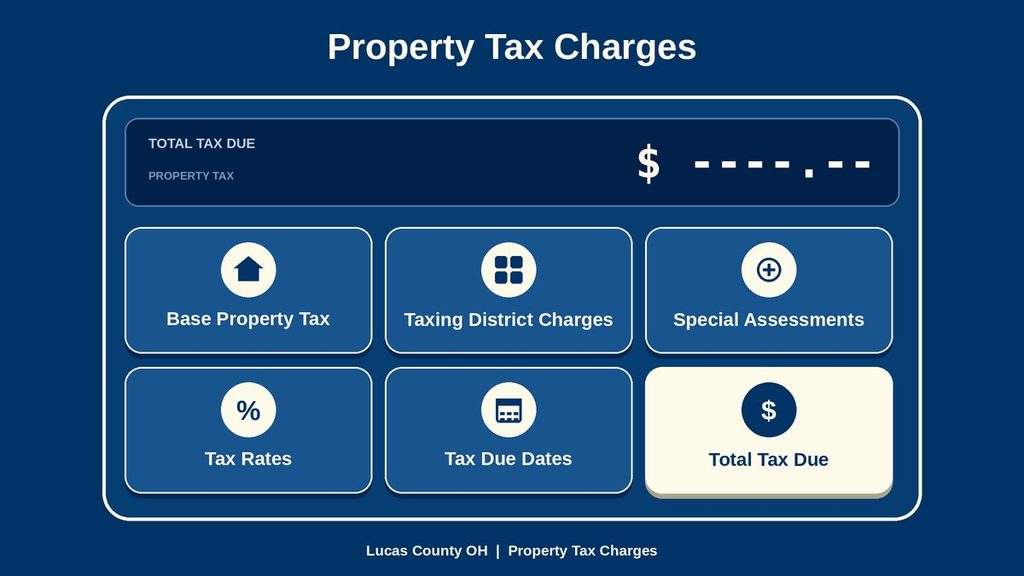
Lucas County tax bills can contain several kinds of charges because one parcel may fall within more than one taxing district. The bill combines assessed information, taxable value, authorized rates, credits, adjustments, and any special assessment. Comparing those fields prevents a reader from treating the total county figure as the complete charge against the parcel.
Base Property Tax
The base tax charge is the starting amount produced from taxable value and the listed rates. Credits, exemptions, and adjustments can change that amount before the total due is calculated. The Treasurer’s account is the source for the amount currently billed or credited to a specific parcel and year.
Taxing District Charges
Taxing district charges may include amounts for a city, township, school district, fire district, or another local authority with taxing power over the property. These charges may appear under different labels because each district sets and reports its own levy. A parcel’s location and the taxing districts shown on the bill determine which charges belong to the property.
Special Assessments
A special assessment is a separate charge for a defined public improvement or service project. Examples can include certain roadway, drainage, sewer, or lighting projects. These charges may appear even when they are not part of the regular millage calculation. If a bill includes one, check the assessment description, project authority, and amount rather than treating it as a general property tax increase.
Tax Rates
Tax rates are commonly shown in mills. One mill equals $1 for each $1,000 of taxable value. A parcel can have several rates because it can belong to several taxing districts, and a rate can change after a levy vote or legal adjustment. A property tax rate calculator can offer an estimate, but the current tax bill provides the amount due to the parcel.
Total Tax Due
The total tax due combines the listed charges, subtracts valid credits, and applies any balance due from an earlier year or legally added late charges. Installment scheduling can divide the current-year amount across two payment dates. Review the total against the payment history so a current installment is not mistaken for a fully paid tax year.
Tax Due Dates
Due dates appear on the bill and in the account’s installment records. Some Ohio real property bills carry two installments, with exceptions based on the amount billed. Do not calculate a due date from a general calendar rule; use the date printed for the parcel because payment timing can affect penalties and interest.
Property Tax Payments
The Treasurer’s payment records show money applied to a parcel and the balance that remains after valid credits. They are useful for checking a mortgage escrow request, closing a sale, confirming an annual tax payment, or finding an unpaid prior-year obligation. A payment should be matched to the parcel, tax year, and installment rather than judged by amount alone.
Payment Dates
A posted payment date records when the tax office applied the transaction to the account. It may differ from the check date, bank posting date, or card-company date. The tax bill’s installment date and the posted transaction date serve different purposes, so both belong in a payment-history review.
Amounts Paid
The payment history identifies the amount credited for each transaction. Several entries may appear when an owner makes partial payments or pays separate installments. Compare each entry with the receipt, bank statement, or card record that shows the actual payment. Equal-looking amounts can belong to different years or parcels, making the account reference necessary.
Payment Status
Payment status can show paid, partially paid, unpaid, or delinquent treatment for the selected year or installment. A status label applies to the period selected, not automatically to every tax year on the parcel. Review the year and installment next to the status so an unpaid old balance is not mistaken for a current-year failure.
Partial Payments
A partial payment reduces the balance but does not make the installment or tax year fully paid. The account should show the amount applied and the amount still due. A receipt for a partial payment does not prove that the parcel is current, and a later penalty or interest charge may appear if the remaining amount passes its due date.
Remaining Balance
The remaining balance is the amount still owed after posted payments and credits are applied. It can combine the current installment with an earlier unpaid year, a correction, or late charges. If a search shows a balance on a parcel that appears paid elsewhere, check all tax years before treating the amount as a new charge.
Payment History
Payment history gives the best tax-account record for checking whether money posted and how much remains. A mortgage lender may ask for an official bill, receipt, or account printout rather than a personal screenshot. If the lender specifies a form or certification, send the record requested by the lender and keep the parcel number and tax year visible.
Property Tax Exemptions and Adjustments
Exemptions can lower taxable value or reduce a tax charge when the owner and property meet the requirements of an Ohio program. The Lucas County Auditor handles property valuation and many exemption filings, while other programs may involve the Ohio Department of Taxation. Approval should appear on the assessment or tax record before a reader assumes the full reduction applies.
Homestead Exemptions
The homestead exemption applies to qualifying owner-occupied residential property in Ohio. The owner must file the required application through the county assessment process and meet the ownership and occupancy rules. Check the exemption amount or status on the tax record for the relevant year. A property can show a different taxable value after the exemption is accepted.
Senior Exemptions
Ohio law provides tax relief for qualifying senior taxpayers, subject to age, income, residence, and application rules. The reduction appears through the property tax account rather than as a simple refund from the Treasurer. An owner who qualifies but sees no reduction should compare the exemption record with the assessed and taxable values for each year.
Disability Exemptions
A disability exemption may reduce taxable value for an eligible owner with a qualifying disability. The application can require documentation or certification in addition to the property filing. Review the approval and effective year because an exemption on a later tax record does not prove that it applied to an earlier year.
Agricultural Exemptions
Agricultural property may qualify for a use-based valuation or an exemption when the owner meets the statutory requirements for the program. The county assessment office and the Ohio Department of Taxation can have different roles in reviewing the property and administering the tax treatment. Keep copies of the approved application or certification with the parcel records.
Other Eligible Exemptions
Other possible programs include treatment for qualifying nonprofit, religious, cemetery, veteran, or disabled-veteran property. Eligibility depends on the exact use, ownership, and governing statute, so similar-looking properties can have different tax treatment. The assessment record should show the approved program and dollar or taxable-value reduction.
Changes to Exemption Status
An exemption can change after a sale, change in occupancy, a change in income, a change in disability certification, or a change in property use. The record may then show an adjusted taxable value or a removed reduction for the applicable period. Compare the exemption status across tax years rather than carrying a prior-year result onto a current bill without checking.
Delinquent Property Taxes
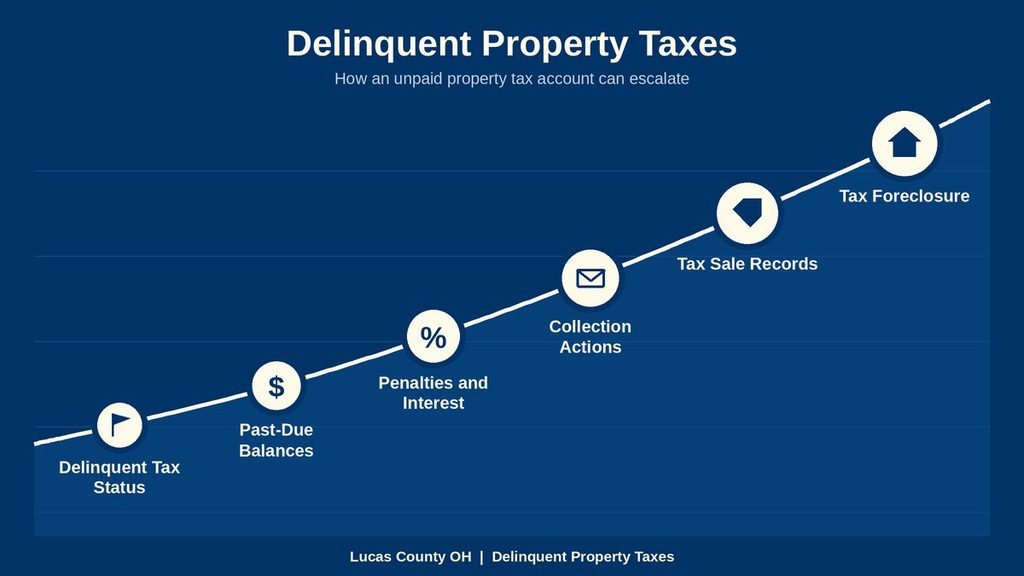
A delinquent tax account contains unpaid charges for which the stated due date has passed. The account can carry the original tax plus penalties accessible through official tax liens records and interest, and collection costs allowed by law Collection may progress from a delinquent designation to legal action, but the tax account and a court case are separate records with separate purposes.
Delinquent Tax Status
Delinquent status applies to the unpaid year or installment shown on the account. It can include current-year charges and older balances. Read the status beside the tax year and amount due because a parcel can be current for one year and delinquent for another. For a full county list, use any bulk unpaid-tax report offered through the official site and check its stated update date.
Past-Due Balances
A past-due balance can remain on a parcel even after a sale or transfer, depending on the owner listed for that tax year and the legal treatment of the tax. The new owner should check old years as well as the current bill. Paying the current installment does not by itself clear an earlier balance.
Penalties and Interest
Penalties and interest are added under Ohio tax-collection rules when an installment remains unpaid after its due date. The exact charge depends on the payment deadline and the amounts involved. Use the amount on the official bill or account rather than an estimate from another year, since rates, credits, and installment amounts can change.
Collection Actions
The Lucas County Treasurer manages tax collection and may pursue remedies permitted by state law. Some cases involve foreclosure proceedings handled through the court system, often with support from the county prosecutor’s office. A collection notice can start a legal process without serving as a final judgment. Review the court docket for the case outcome and deadlines stated in the court papers.
Tax Sale Records
A tax-sale record concerns property proposed for sale because of delinquent taxes. A sale notice does not prove that the sale occurred or that title transferred. Confirm the result through the official sale record and, when applicable, a recorded deed. Buyers should also examine title because a tax sale does not remove every claim that existed before the sale.
Tax Foreclosure
Tax foreclosure is a court action used to collect qualifying delinquent taxes. The Treasurer’s account shows the tax debt and collection status; the court record shows the lawsuit, filings, orders, and final disposition. A mortgage company or property buyer seeking lien status needs both the tax account and a title examination rather than one record used for both purposes.
Historical Property Tax Records
Historical tax records help owners compare prior bills, reconstruct a payment history, and review changes in a property’s taxable value. The online search may not display every archived year, so an official bill or a request to the Treasurer may be needed for older material. A historical record is most reliable when the parcel number, owner, tax year, and installment match.
Previous Tax Years
Choose the tax year before reviewing amounts because one account can contain many years with different owners and balances. If an old year is absent from the search, verify the parcel number and year before treating it as unavailable. Older bills, archived tax-roll records, or a direct request to the Treasurer can fill a missing year.
Historical Tax Amounts
Historical tax amounts reflect the charges set for that year. A rise in the bill can result from a higher taxable value, a different millage, a new special assessment, an exemption change, or an unpaid prior balance. Comparing only the total bill can hide the cause of the change.
Historical Property Values
Historic assessed and taxable values show how the county treated the property for each year. Keep land and improvement values separate when the record permits. A market sale does not always create an equal change in assessed value because state law controls how real property is assessed.
Past Payment Records
Past payment entries connect a receipt or account credit to a particular year and installment. Check the amount, posting date, and remaining balance. A payment recorded in one year does not prove that the next year was paid, even when the amounts are the same.
Changes in Tax Liability
Tax liability changes when taxable value, rates, credits, exemptions, assessments, or special assessments change. Separate the value effect from the rate effect, then check one-time charges. A parcel can owe more because of a new local levy even when its assessed value did not rise.
- Match each year to the same parcel number before comparing totals.
- Compare assessed value and taxable value as separate fields.
- Separate a millage change from a property-value change.
- Match each payment to its tax year, installment, and posting date.
- Check exemption status, assessment changes, transfers, and special assessments for the affected year.
Property Tax Record Verification and Corrections
A correct tax-account review depends on matching the parcel, year, values, charges, and payments. Errors can come from several offices because each office maintains a different part of the property system. The Treasurer can correct tax-account postings, the Auditor can address valuation and exemption records, and the Recorder holds recorded deeds and mortgages.
Confirming the Tax Account
Compare the parcel number, owner name, situs address, legal description, and taxing district shown on the official bill with the search result. A mailing address can differ from the physical property address, and owner names may include or omit middle initials. The parcel number and legal description provide the strongest identifiers when names or addresses create doubt.
Checking the Tax Year
Confirm that the result shows the year needed for a closing, mortgage escrow request, tax sale review, or personal record. The search view can carry a current balance forward from an older year. Compare each installment with the tax year and due date printed on the bill.
Reviewing Property Values
Review the market value, land value, improvement value, total assessed value, and taxable value. The total assessed value may be higher than the taxable value because an exemption or adjustment applies. If a tax notice shows a different taxable value, check the exemption line and the date on which the assessment changed.
Verifying Tax Charges
Recalculate the bill by comparing taxable value with each listed rate, then account for credits, adjustments, special assessments, and installment amounts. A calculator can test the arithmetic, but it cannot replace the current official bill because it may use older rates or omit project charges. Confirm disputed line items with the office that issued them.
Checking Payment Entries
Match each transaction to the receipt or bank record, then check the amount credited and balance after payment. Look for separate entries for the two installments. If the tax ledger and the bank statement show different dates, keep both records because the ledger shows when the tax office applied the credit.
Correcting Record Errors
Describe the error as a calculation issue, payment issue, valuation issue, name issue, or legal-title issue before sending a correction request. Include the parcel number, tax year, disputed amount, and copies of the bill or receipt. A request for a refund or account credit should state the expected result and explain why the posted amount differs from the supporting document.
Property Tax Refund Claims
An apparent overpayment can require a refund, an account credit, or a correction after the Treasurer reviews the tax ledger. Submit the bill, receipt, transaction confirmation, and a clear calculation of the disputed amount. The office applies the governing collection rules when deciding how to resolve the balance.
Tax Assessment Appeals
A dispute over assessed value belongs in the valuation complaint or appeal process administered through the county assessment system and heard by the Lucas County Board of Appeals. Use the form and deadline stated on the assessment notice or by the Board. A Treasurer account correction cannot replace a valuation appeal because the two offices maintain separate records.
Property Tax Code References
Ohio Revised Code Chapter 2507 covers public records, Chapter 718 covers property assessment, Chapter 5715 covers taxation, and Chapter 323 covers tax collection and foreclosure procedures. Readers seeking the legal text should use the current Ohio Revised Code rather than a summary posted by a third party. The statute and the county’s official record should be checked against the tax year in question.
Matching the Error to the Proper Record
Property Tax Record Search Problems
A failed or confusing search often results from a mismatched parcel, name, year, or address rather than a missing public record. Begin with the parcel number from the oldest available tax notice. Then compare the owner, situs address, legal description, and year with the search result before requesting help.
Property Not Found
Try the parcel number without spaces and check for a transposed digit. If the portal offers an address field, use the situs address shown on the bill and test the street suffix used by the county. A property may also lack a current searchable bill if it is tax-exempt, newly mapped, or still listed under a prior parcel number.
Owner Name Does Not Match
Tax records can list the owner for the selected tax year, which may differ from the present owner. A recent transfer, an estate, a name change, or a spelling difference can account for the mismatch. Compare the year-specific name with the deed and contact the responsible office for the specific name correction rather than opening a different parcel.
Incorrect Account or Parcel Number
A mailing address can pull up a different parcel, and a property with multiple units may use a distinct number for each improvement. Compare the full legal description and taxing district with the bill. A parcel map can confirm the physical location when the written address is unclear, but the map result should still be checked against the tax number.
Tax Year Not Available
The search screen may not carry every archived year. Confirm the year selection and parcel number before assuming the record is missing. An official prior-year bill, archived tax roll, or request to the Treasurer can supply a year that the current search view does not show.
Missing Payment Information
If a receipt shows payment but the tax account does not, compare the posting date, amount, payment method, confirmation number, and installment. The bank or card statement may show the transaction before the tax ledger receives the credit. Keep the supporting documents because the discrepancy cannot be resolved from the portal result alone.
Unexpected Tax Balance
Check every tax year on the parcel, including an old unpaid year. Then compare the current installment, added late charges, special assessments, credits, and prior-year balance with the bill. A balance that appears after a successful payment often belongs to a different year or another installment.
Recently Updated Record
A recent update can reflect a payment posting, transfer, reassessment, exemption change, correction, or collection action. If the result shows a last-updated date, keep a copy of that version for later comparison. Recheck the tax year and amount before drawing a conclusion from a record that changed after a filing or payment.
Contact Details
Use the contacts below for Lucas County tax account questions. The delinquency line focuses on overdue tax matters and collection status. Staff can provide information about outstanding balances, payment records, and applicable deadlines. Keep your parcel number or tax account details ready when calling. For the most accurate information, confirm account-specific matters directly with the responsible county office.
Frequently Asked Questions
Property tax records give owners and buyers clear insight into assessed values, payment status, and any outstanding balances. Accessing these records helps verify ownership, plan budgets, and avoid surprise liens. Local treasurer offices, like Lucas County, keep searchable databases that link parcels to tax bills, payment histories, and exemption eligibility.
How can I look up a property tax record for a specific parcel in Lucas County?
Visit the Lucas County Treasurer website and enter the parcel number or owner name in the search box. The system returns the assessed value, current tax bill, payment history, and any unpaid balance. Review the details to confirm amounts, due dates, and exemption status. If the parcel number is unknown, use the address search to locate the correct identifier.
Where can I download my residential property tax bill online?
Log in to the online portal on the treasurer’s site. After signing in, select “Tax Bills” and choose the year you need. A PDF version appears for download or printing. The bill lists taxable land value, tax rate, and any penalties. Save the file for personal records or mortgage verification.
What steps should I take if I find an unpaid property tax balance?
First, verify the balance by checking the payment history in the online account. Contact the treasurer’s delinquency line at 419‑213‑4055 to discuss payment plans or penalty waivers. Pay the amount through the portal, by phone, or at the office to stop further interest. Keep the receipt and confirm the account shows a zero balance.
How do I find out if a property qualifies for tax exemption?
Search the property’s record and look for an “Exemption” field. Common categories include senior citizen, veteran, and agricultural use. If the field is blank, contact the assessor’s office to request eligibility forms. Submit required documents, such as proof of age or service, and wait for approval before the next tax cycle.
Can I view historic property tax payments for a commercial building?
Yes. Use the “Tax Roll Database Access” link on the treasurer’s site and select the commercial property option. Choose the desired year range to display each bill, payment date, and any liens recorded. Export the list to CSV for analysis or to support a loan application.