Sex Offenders data in Ohio is accessible through the state Attorney General’s online search, letting families and neighbors quickly verify a sex offender lookup, see a sex offender map, and understand residency restrictions that protect schools and parks. The portal lists registration deadlines, risk tier, and current compliance status, while highlighting how updates are logged and why some entries may temporarily disappear. This transparency helps users gauge public safety and decide if further background check steps are needed.
When a name appears in the Ohio public records, you can confirm the accuracy of the listing, check address changes, and learn about the offender’s registration level and community notification details. The system also explains how to report incorrect information, the process for removal after the required registration period, and where to find support groups or rehabilitation programs that aid reentry. Knowing these points empowers residents to stay informed and safe.
How to Search Sex Offenders
Ohio’s Sex Offender Registry is the statewide public record for people whom Ohio law requires to register after a qualifying conviction or court adjudication. A search can match a name with a registered address accessible through official arrest reports databases and legal classification, and current registry status Its main purpose is public-safety review, not live tracking or a complete criminal-history check. Results should be checked against the official page and, when facts remain unclear, the court or sheriff’s record.
Official Search Portal: https://www.ohioattorneygeneral.gov/Sex-Offender-Registry/Search-Results?search=
Steps to Search
- Open the Ohio Attorney General’s Sex Offender Registry and use the statewide search form.
- Enter the person’s legal name. Try a middle name, middle initial, or known alias when the first search produces no match.
- Narrow the results by city or ZIP code. For a Lucas County OH search, use Toledo or another Lucas County location when it fits the registered address.
- Review each result for matching name, age or birth date, photo, registered address, registration class, and status.
- Follow the official correction process if a result appears incomplete or conflicts with a court record. Third-party offender lists do not replace the state registry.
Sex Offender Registration Requirements in Ohio
Ohio registration rules come from the court case and state statutes, not from a reader’s suspicion. The statewide registry reflects those records after law-enforcement agencies and the Ohio Attorney General process the required updates.
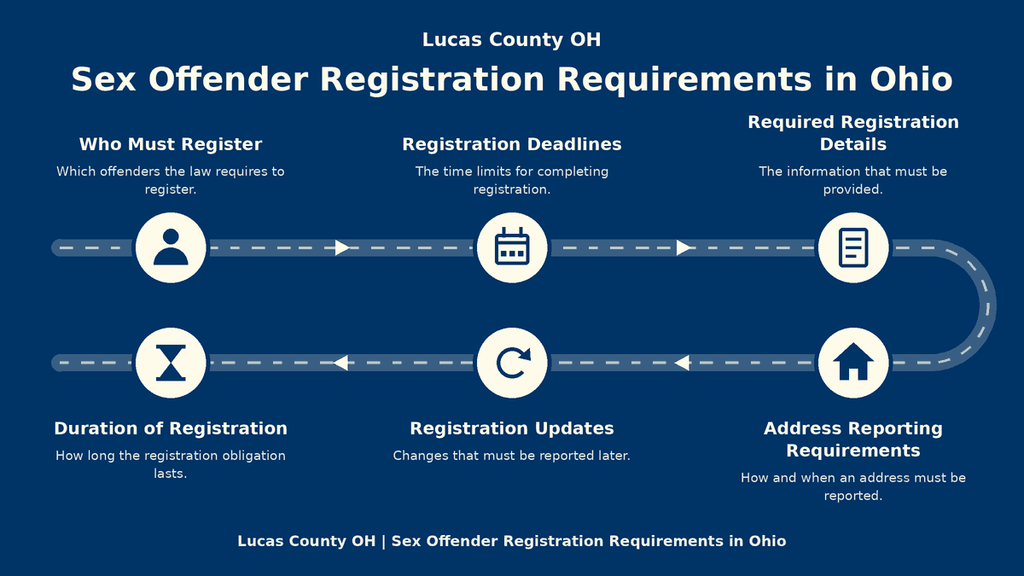
Who Must Register
Ohio Revised Code section 2950.04 covers several categories, including convictions for listed sexual offenses, certain offenses with a sexual element, child-voying or child-solicitation convictions, an acquittal by reason of insanity, and specified court adjudications. Section 2950.11 covers a person who moved to Ohio from another state and must register in that state. A registry search cannot decide whether a new conviction belongs in one of these categories. That legal question belongs to the sentencing court.
Registration Deadlines
Section 2950.04 sets a deadline tied to the type of sentence or release. The statutory period is generally five days measured from the applicable event, such as sentencing, placement on probation or community control, parole, or release from confinement. The exact trigger changes with the case. A registrant should follow the deadline in the court order and the sheriff’s instructions rather than assume that every case has the same starting date.
Required Registration Details
Ohio’s registration form covers a legal name and aliases, residential address, date of birth, race, sex, physical details such as height, weight, eye color, and hair color, plus conviction and release details. Sections 2950.06 and 2950.07 also govern supporting records such as a photograph and fingerprints. The public result may show a photo and selected case details, but it does not expose the complete fingerprint file.
Address Reporting Requirements
A registrant must tell the sheriff’s office about a change in registered address or name within the period set by section 2950.08. The statute also creates a duty to report a temporary residence after the registrant stays away from the registered address for more than 15 days. The county sheriff’s office receives these reports because the sheriff handles the local registration duties.
Registration Updates
Ohio requires periodic address verification even when a registrant has not moved. Under section 2950.08, a registrant verifies the registered address and related details with the sheriff at least once every 90 days. A missed verification can create a compliance problem, so the update date on a public record deserves attention.
Duration of Registration
Section 2950.13 sets the registration period according to the person’s statutory class and sentence. A public result may show a fixed end date, a life term, a tier, or a legal class. A life term can be changed only through the proper court process. A new address, a map marker, or an online profile does not shorten or extend the term.
Public Registry Classification
Ohio’s public records use legal classifications so agencies can apply the correct registration period. These labels help readers interpret a result, but they do not measure a person’s present behavior or predict a future offense.
Offense Classification
The registry can show the offense description, conviction date, court, and related case dates. These fields come from the sentencing record. A registry entry is not a new conviction, and its wording does not replace the judgment or docket in the criminal case.
Risk and Tier Classification
A tier or statutory class is a legal category used for registration. It is not the same as a clinical risk assessment, which may consider a person’s history, current circumstances, treatment progress, and other case details. Public readers should not treat a tier as a current safety rating.
Registration Level
The registration level shows the period assigned by the sentencing court and the legal category used by the registry. Section 2950.13 provides the periods shown below. A court order may set an end date that differs from a standard term, so the dates on the official record control the practical status.
Classification Changes
A sentencing court, not the public search page, decides a person’s legal classification. A later court order can change a tier, period, or related legal status. The registry then receives an update from the source record. Until that update appears, an online result may not reflect the newest court decision.
Multiple Qualifying Offenses
A person may have more than one qualifying conviction. The sentencing court applies Ohio law to the case as a whole, and the public result may show more than one offense entry. Do not add registration periods from each listing. The classification and end date entered by the court provide the proper term.
Sex Offender Residence Details
Residence details help narrow a statewide search and help local authorities carry out registration duties. They describe the address reported to the sheriff’s office, not a live GPS position or proof that the listed person is present at that address at a particular moment.
Registered Residence
The registered residence is the address supplied through the registration process. A map pin or street address on the registry reflects that reported residence. It does not show the person’s schedule, workplace, daily route, or current location away from home.
Address Changes
A move can take time to appear because the registrant must report the change and the agency must update the statewide record. Compare the address with the most recent update date. A stale address may mean a reporting delay, an address processed during a recent update, or a registry problem.
City and ZIP Code
City and ZIP code are useful geographic filters. For Lucas County OH sex offender searches, enter Toledo or the applicable city when the form requests a location. A broader name search followed by a city or ZIP filter can produce fewer false matches than entering several pieces of a partial address at once.
Geographic Registry Searches
The statewide search supports geographic narrowing through the location fields and map view. The map groups official results by registered address. It does not create a residence requirement, show every person connected to an address, or prove that two people with the same surname belong to the same family.
Residence Data Limits
Registrant addresses can change, and some records may involve temporary residence reporting. The public result may also lag behind a move by several days. For a safety-related decision, confirm the address with the official source listed for the record rather than relying only on the map.
Registry Compliance and Status
Registration status helps readers see whether a record is active and whether the person appears to have met recent reporting duties. It is an administrative status, not a measure of conduct on a particular day.
Active Registration
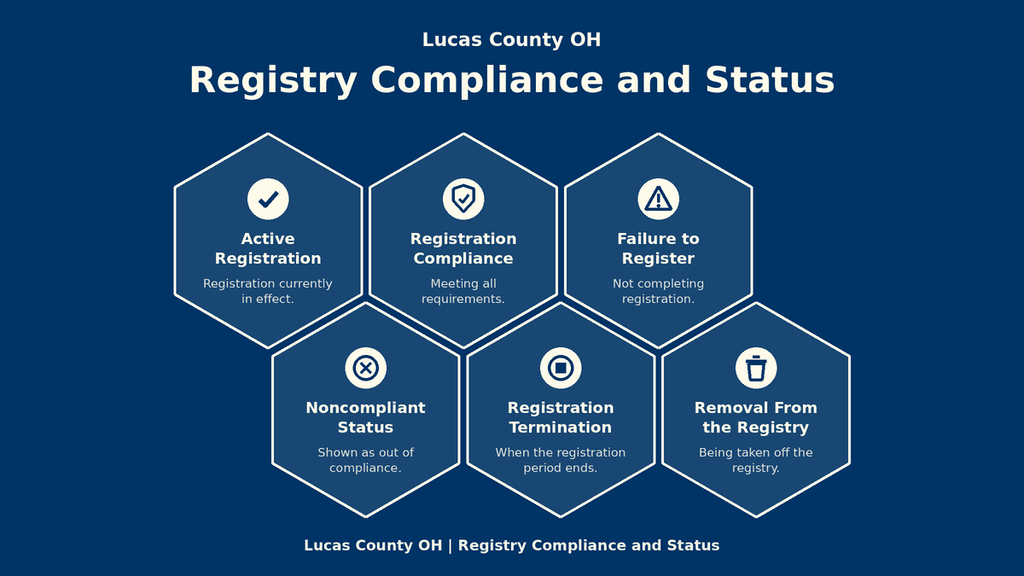
An active registration means the person remains listed because the statutory period or another legal basis remains in force. It does not mean the person is under active arrest, has committed a new offense, or is violating a residency rule.
Registration Compliance
A compliant status generally means the record has no unresolved registration issue. Periodic address verification, timely change reports, and other required contacts support that status. Review the entry’s dates because a status can change after a new verification or court action.
Failure to Register
Failure to register or report required changes can lead to criminal charges under Ohio law. A missing listing does not prove that a person has no registration duty. Concern about a possible reporting failure belongs with the sheriff’s office or the court handling the case.
Noncompliant Status
A noncompliant label points to an unresolved reporting matter recorded by the system. It should be checked against the latest update date and the responsible local agency. The label by itself does not explain the cause, so readers should seek the current case status rather than draw a conclusion from one field.
Registration Termination
Registration ends when the legal basis for listing ends, which can follow a completed statutory term or a qualifying court order. The agency that supplied the registration data records the change. A person remains visible in old search results or third-party pages until those sources refresh.
Removal From the Registry
Removal follows the official termination process and depends on the agency updating the statewide record. A person who believes the listing should end should ask the sheriff’s office or court to confirm the case status and the required documentation. A request for removal does not create an automatic pause.
Public Sex Offender Registry Sources
The Ohio Attorney General’s registry is the official statewide source named on this page. State statutes supply the rules behind each entry. Court records remain the authority for case facts, sentences, and later orders.
Online Search Portal
The portal listed at the start of this page provides the current statewide results. Use it instead of a private people-search site, an unsourced map, or a list created by another user. Those outside sources may copy old records, omit removed people, or combine unrelated names and addresses.
Publicly Displayed Details
A public listing can contain a name, aliases, registered address, identifying details such as age or birth date, a photo, offense and court details, registration class, status, and update dates. Some fields may be limited under state law or agency rules. The search result should be read as a legal registry record, not as a complete profile of a person.
Official Registry Sources
The following state sources explain the registry’s legal basis and the differences among registration, address reporting, duration, and notification.
Historical Registry Data
The main registry presents current registration data rather than a complete history of every address, conviction, or sentence. A court docket may be needed to trace referencing verified wanted persons records and case events and earlier orders A result that shows a present address does not provide the history of past residences by itself.
Registry Record Requests
An online result is not a certified court record or a certified copy request. When a court form, legal filing, or authorized screening process requires formal documents, request the proper record from the court, sheriff’s office, or other custodian named in the case. Fees and request methods vary by office and record type, so the receiving office should state its current process.
Registry Data Accuracy
Registry accuracy depends on court records, registrant reports, and agency updates. A name match alone is weak proof because aliases, common surnames, and inaccurate addresses can create confusion.
Confirming a Registry Listing
Confirm a listing by comparing several fields rather than relying on the name. A photo may have changed, and a displayed age may represent the age on a particular date. The strongest comparison combines the legal name, alias history, date of birth or age range, registered address, physical details, and case dates.
- Legal name and every alias shown by the court
- Date of birth or the age range on the record
- Photograph and current physical details
- Registered address and most recent update date
- Registration class, status, offense date, and court
Checking Current Registration Status
Check the status field and the date of the latest update. An active record can remain active for years, while a compliance label may change after a missed verification or corrected report. The status does not show whether the person has a new case, so current court records remain necessary for that question.
Verifying Address Details
Compare the registry address with official case and agency records. A recent move, a change reported but not yet processed, or an incorrect entry can create a mismatch. A difference in apartment formatting, street abbreviation, or ZIP code may be harmless, but a different street or city needs direct confirmation.
Identifying Duplicate Listings
Separate results can reflect aliases, name changes, or the same person moving between counties. Compare dates, addresses, photos, and case details before merging them. Two people can share an address, and one person can have more than one historical listing. The registry itself provides the records needed to make that comparison.
Reporting Incorrect Registry Data
Report a suspected error through an official route and provide the exact field that appears wrong, the correct value, and supporting case details. The sheriff’s office in the county of residence handles registration updates, while the sentencing court controls changes to a conviction, tier, or registration term. Avoid placing addresses, birth dates, or case details in a public post or reply.
Sex Offender Registry Privacy and Limits
The registry balances public access with legal privacy rules. It publishes selected registration data, not every record connected to a person. Readers should use the data for a lawful purpose and keep verification separate from rumor or accusation.
Details Available to the Public
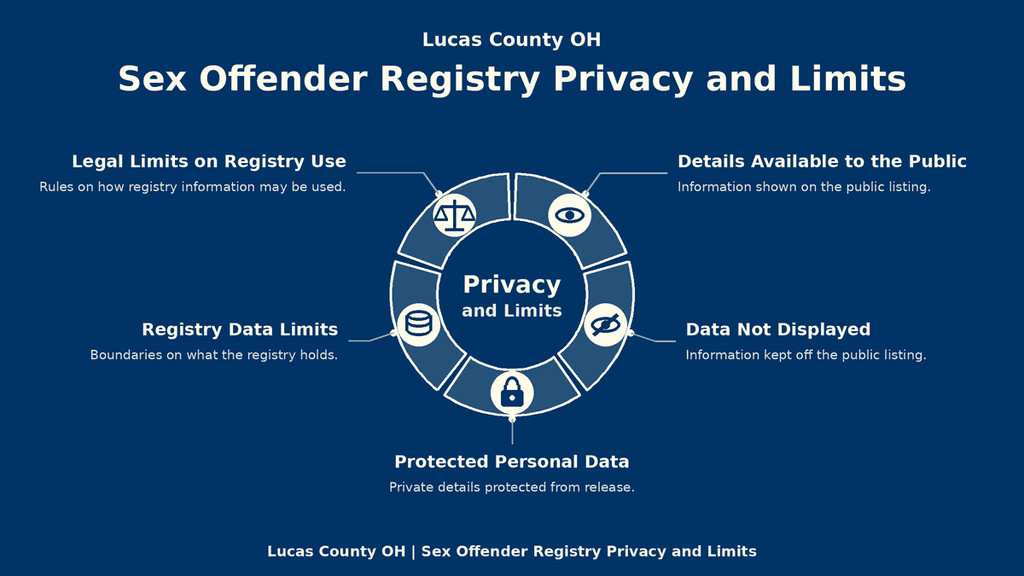
Public details can include registration identity, registered residence, a photo, offense and conviction information, class or tier, and compliance status. The exact set of fields can change with law and agency policy. A displayed address comes from the registration process and should be treated as registered data rather than a live location feed.
Data Not Displayed
The public search does not provide complete fingerprint files, driver’s license records, medical files, treatment records, sealed case materials, or private communication. The result also does not contain every former residence or every event in a case history. A background check based only on this page will have limits.
Protected Personal Data
The registry does not make unrelated family members responsible for a registrant’s legal duties. Reposting a home address or adding private details can expose people who have no registration requirement. Use only the details shown by the official portal and do not build extra profiles from family connections, social posts, or guesswork.
Registry Data Limits
Registration data can contain errors because it depends on reports made by people, courts, and local agencies. Update delays can leave old addresses on public pages. The system records legal requirements, not the full behavior or current condition of a registered person.
Legal Limits on Registry Use
Use the registry for a lawful public-safety purpose. A public entry is not proof of identity, a new crime, current dangerousness, or misconduct at a particular address. Employers, housing providers, and other organizations must follow separate legal rules for criminal-history screening. Harassment, threats, or publication of accusations based on a registry match can create legal and personal harm.
Search Problems
Most failed searches trace to name variation, location changes, recent updates, or incomplete reporting. Work through one issue at a time and keep a record of the names, dates, and locations tested.
Person Not Found
A person may be absent because the search term is too narrow, the person uses another legal name, or the required registration has not yet reached the statewide system. Try a middle initial, fewer middle names, a former surname, and a broader city or ZIP search. Some people with qualifying convictions may never appear because they fall outside a registration category or have a lawful termination.
Multiple Matching Listings
Multiple results can share a surname and city. Compare full names, aliases, photos, ages, addresses, and court dates before treating them as one person. A recent address change may leave two connected records during processing. Do not merge listings unless the official details support that conclusion.
Address Search Produces No Results
An address-only query can fail when the registry uses a different street abbreviation, mailing format, apartment format, or older ZIP code. Search by legal name with city or ZIP filters, then check the displayed address. A person who has moved or spends part of the week elsewhere may have more than one registered or temporary address.
Recently Updated Listing
A fresh update may reflect a routine 90-day address verification rather than a conviction or legal status change. Check the update date beside the status and tier fields. If those fields remain the same, the change may only concern an address, alias, or routine record verification.
Incomplete Registry Entry
An entry with missing details may still be in the middle of an agency update. The public result can show only the fields currently stored by the system. Do not fill a blank from another website. Ask the official record custodian to confirm the missing field and state whether a case-document update is pending.
Incorrect Search Terms
Search names without quotation marks or extra punctuation when the form allows it. Try both given-name and surname orders if needed, remove a middle initial, and check common spelling variants. Broad searches create more matches, so narrow the results with a city or ZIP code after confirming the identity fields.
Ohio Sex Offender Law and Public Safety
Ohio’s registration system joins criminal case law with local registration duties. Residency rules, community notification, treatment, and monitoring can apply in some cases. None of these subjects turns a registry label into a complete picture of a person’s conduct.
Residency Restrictions
Ohio law can restrict where certain registered people may establish a residence. A court may issue an order preventing residence within 1,000 feet of a school or preschool after reviewing the offense and the statutory risk factors. Existing residences and other statutory exceptions may affect the order. The court record controls, so a map search alone cannot prove that a restriction applies or has been violated.
Community Notification
Ohio provides a process for law-enforcement agencies to notify eligible schools, child-care organizations, youth groups, and other covered entities when the statutory conditions are met. This notification is different from the public map and registry list. A neighborhood’s community-notice policy can affect how alerts are delivered and who receives them.
Sex Offender Risk Assessment
A legal tier does not replace a professional risk assessment. Case professionals may review the conviction, criminal history, current supervision, treatment findings, and changing circumstances. Those assessments can contain detailed or sensitive material and are not supplied in full through the public registry. Readers should not convert a tier into a claim about present danger.
Treatment and Rehabilitation
A court, probation department, parole authority, or other case agency may order assessment or treatment for a particular case. Completion depends on the order and the provider’s records. The public registry does not show treatment attendance, progress, completion, or a support-group connection. Rehabilitation claims should be checked with the responsible case agency or treatment provider.
Monitoring and Tracking Technology
A court may require electronic monitoring, GPS equipment, or another tracking device in a qualifying case. The responsible agency manages the device and receives its data. A marker on the sex offender map is only a registered-address display. It does not show the location of a person or the location of a monitoring device.
Expungement and Civil Commitment
Expungement is a separate court process, not a button on the registry. A court order and the statutory requirements control whether a record can be expunged. A civil commitment is another legal status created through court proceedings and does not apply to every registered person. After either kind of order, verify that the public registry has received the change before treating it as complete.
Background Checks
A sex offender registry search is not a full background check. It does not cover every conviction, civil case, employment history, or address. Organizations that use criminal records for housing, employment, credit, or licensing must follow the separate legal rules for those decisions, including notice and consent requirements that may apply.
Personal Safety and Prevention
Use exact identifying details before acting on a registry match. If a record points to a concern, review observable facts, contact the appropriate sheriff’s office or police department, and report specific conduct rather than repeating an unproven allegation. Do not confront a registered person based only on a listing. Keeping accurate case details, avoiding public doxxing, and checking the current official record support safer decisions.
Reentry Challenges
People leaving prison or community placement can face housing limits, employment barriers, compliance duties, and family separation. Those challenges do not erase legal accountability, but they can affect a person’s ability to meet registration requirements. Probation or parole staff, treatment providers, and approved reentry services can address case-specific needs. The registry alone cannot show whether support is available or whether a person is meeting it.
Contact Information
Use this statewide contact for questions about the Ohio Attorney General’s sex-offender registry and related state resources. The office provides information about registry searches, offender classifications, and applicable reporting requirements. Visitors can consult the official state website for current registry details and public access information. For questions about a specific listing, contact the Ohio Attorney General’s office directly.
Frequently Asked Questions
Ohio’s sex offender registry helps families, schools, and neighbors find reliable information about registered offenders. Knowing how to search, interpret results, and understand local restrictions can protect homes and communities. The state offers free online tools, phone support, and printed guides to keep public safety clear and current.
How can I look up sex offenders in Lucas County?
Visit the Ohio Attorney General’s website and enter the city or ZIP code in the search box. Results show the offender’s name, address, offense type, and registration status. Verify details by calling the state office at 866‑406‑4534 if anything seems unclear. The site updates weekly, so you always see the latest information.
What does a sex offender map display?
The map plots each registered offender’s residence, workplace, or school address. Click a pin to view the offender’s classification, conviction date, and compliance level. Maps help parents choose safe routes for children and let neighbors see if an offender lives nearby.
Are there residency restrictions for sex offenders in Ohio?
Yes. State law bars many offenders from living within 1,000 feet of schools, parks, or day‑care centers. Local ordinances may add stricter limits. Check the offender’s registration page for any “restricted area” notes, then contact the county sheriff’s office to confirm compliance.
How does Ohio notify the public about new sex offenders?
The Department of Public Safety sends email alerts, posts notices on community bulletin boards, and updates the online registry when a new offender registers. Residents can sign up for alerts by creating an account on the Attorney General’s site. Alerts include the offender’s name, address, and offense details.
Can a sex offender’s record be removed or sealed?
Ohio allows limited expungement for certain juvenile offenses and non‑violent cases after a waiting period. The offender must petition the court, show completed treatment, and prove low risk. Even if a record is sealed, the individual must still register if the law requires it. Consult a local attorney for specific steps.