Traffic Ticket Records let drivers instantly verify citations, fines, and court dates through a secure online portal, helping you avoid surprise fees and missed hearings. By entering a citation number or license plate, the traffic ticket records search tool pulls the latest status—from pending to dismissed—directly from the Lucas County online docket system. This fast view traffic ticket records experience cuts down phone calls, clarifies payment obligations, and ensures you stay compliant with Ohio traffic code requirements.
Traffic Ticket Records also serve as a reliable source for historical data, showing original citation entries, status changes, and any court dispositions. The traffic ticket records database highlights fine amounts, court costs, and any outstanding balance, while the verification process cross‑checks driver information and violation dates for accuracy. Accessing this public record via the official Lucas County portal empowers drivers to manage multiple violations, correct errors, and plan timely payments without confusion.
How to Search Traffic Ticket Records
Traffic Ticket Records for Lucas County, Ohio, are court case entries that show a citation, the charge, the current case status, and money owed or already paid. A docket search helps you confirm which court holds the case accessible through official traffic court records databases and check the latest status, and find the right step for payment, a hearing, or a copy of a court document The Lucas County Clerk of Courts publishes an Online Dockets page that names the services used to view General Trial Division cases. Start there, pick the service that matches your citation, and compare every result with the paper ticket.
Official Search Portal: https://www.lucascountyoh.gov/3707/Online-Dockets
Steps to Search
- Open the Lucas County Online Dockets page and read the list of docket search services for General Trial Division cases.
- Choose Justice Case Access or research OH, the two services named on the county page, based on the court shown on your citation.
- Enter the court case number if your paperwork has one. If you hold only a citation number, try it in the case number field, and fall back to a party name search if that returns nothing.
- Open the matching result and compare the party name, offense date, charge, and court with your paper citation.
- Read the newest status entry and any financial lines, then follow the court’s own instructions for payment or document requests.
Lucas County OH Traffic Ticket Records Search
The county’s Online Dockets page is the official starting point for General Trial Division case records. It lists Justice Case Access and research OH as the services where those case records can be viewed. The General Trial Division handles felony, misdemeanor, and civil cases in the Lucas County Court of Common Pleas, so a traffic case that reaches that court can carry a docket with the original filing, later status changes, and money entries.
Some citations never reach that court. A ticket issued inside a city or village often goes to a municipal court, and a ticket may stay with the issuing agency until a driver responds or a case is formally filed. The court name printed on the citation paper tells you which court system to search. Checking that name first removes the most common cause of an empty search result.
A driver’s license number is not a standard field in public court dockets. Public searches run by the party name as the court recorded it, or by case number, so use the case number whenever your paperwork has it. Names with spaces, hyphens, or suffixes often need a different search entry than the version on your license.
Who Maintains Each Part of a Traffic Record
The citing officer writes the ticket and sends it for court processing, so the first description of the charge comes from that agency. The Clerk of Courts then keeps the case file, enters each event, receives payments, and issues copies of filed documents. The Ohio Bureau of Motor Vehicles applies point and suspension rules to reported court findings, which means the court record holds the facts and the motor vehicle record shows what the state has applied.
Keeping those roles straight prevents wasted calls. A question about what the officer wrote belongs with the ticket in hand, a question about status, balance, or filed documents belongs with the court, and a question about points on a driving record belongs with the motor vehicle agency. The docket search answers the court questions.
Traffic Violation Details
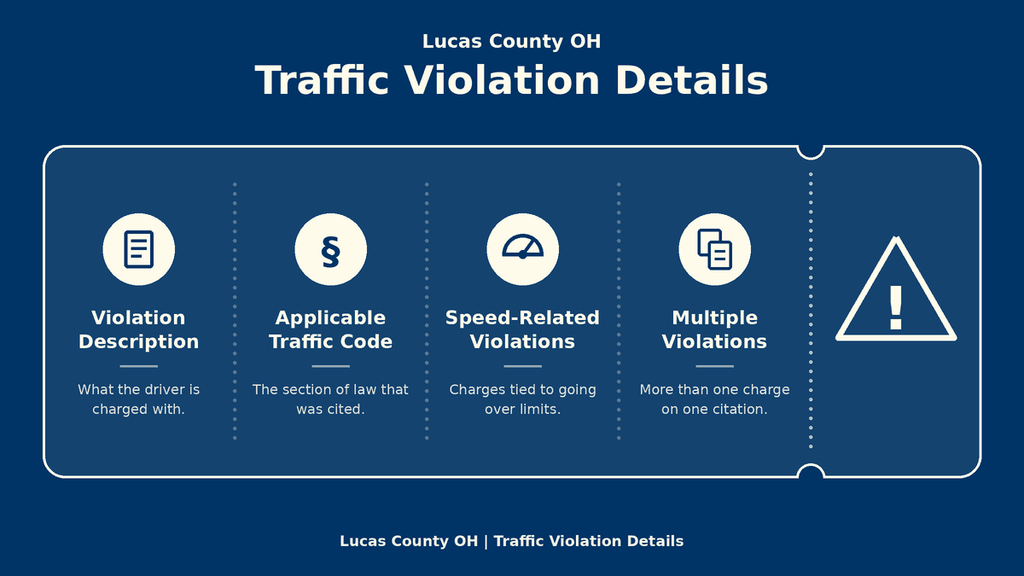
A docket entry starts with the basic facts of the charge. The description tells you what the citing officer alleged, and the case number ties that charge to every later event in the court file. A ticket number and a court case number are often different identifiers, so compare both before treating a search result as your record.
Violation Description
The description is a short account of the conduct cited, such as a speed, stop-sign, or lane violation. Docket wording is often abbreviated and may differ from the wording on your paper ticket. Match the date, location, and driver name to confirm the entry belongs to the same event.
Applicable Traffic Code
Court dockets often list the code section cited by the officer, drawn from the Ohio Revised Code. Sections such as 4511.21 for speed and 4511.19 for stop-sign violations appear often on traffic dockets. The code number identifies the charge type, and a court can add or change a cited section as the case moves forward. Read the charge list from the newest docket entry rather than the earliest one.
Violation Category
Cases may be grouped by category, such as criminal traffic, civil traffic, or a related equipment or registration charge. The category affects how the court processes the case and what the driver must do to resolve it. A category label is a processing tag, not a final finding about what happened on the road.
Speed-Related Violations
A speed citation records the alleged speed and the posted limit as entered by the citing officer. Some entries add a short description of the road, the vehicle, or the conditions. Any dispute about the speed reading belongs in the court process, and the docket shows how that dispute ended.
Equipment and Registration Violations
Equipment and registration charges cover items such as lights, tires, plates, or expired registration. These cases can travel on the same docket as a moving violation, and a registration problem sometimes produces a separate case. Look for more than one entry under the same driver name before you decide that everything is settled.
Multiple Violations
One stop can produce several charges, and one driver can have several open cases in the same court. Each case carries its own case number, charge list, and status line. Reviewing them one at a time keeps a paid case from being mistaken for a closed one.
Traffic Ticket Record Status
The status line gives the current posture of the case. Reading it correctly matters, since a case can move from open to closed without another ticket or letter arriving in the mail. Exact labels differ by court, yet most dockets draw from a small set of familiar terms.
Wording differs between services. A service may show a short code instead of a full phrase, and a case can carry more than one status for different parts of the file. When a label is unclear, the date beside it and the last event in the history give the best context. If the status and the money entries disagree, treat the case as open and ask the clerk listed at the end of this page.
Traffic Ticket Record History
A docket is a dated list of events rather than a single summary. Reading it from the oldest entry forward shows how the case moved, what the driver filed, and how the court responded. That sequence answers most questions about a ticket faster than a phone call.
Original Citation Entry
The earliest entries record the filing of the case, the charge, and the party names as the court has them. A filing date later than the offense date is normal, since the court receives and enters the case after the citation is processed. That same entry shows the case number used for every later event.
Status Changes
Each change appears as a dated entry with a short description. Common events include an answer or plea, a continuance, a hearing, a judgment, and a closure. These dates form the clearest timeline of the case and make gaps in the file easier to explain.
Court Disposition
The disposition entry states the outcome, such as a conviction, an acquittal, a dismissal, or a resolution by agreement. It may name the statute section under which the court entered judgment. Read the full entry rather than relying on the status label alone, since a short label can hide conditions attached to the outcome.
Payment Updates
Payments appear as separate entries with a date and an amount. A balance may still show after a payment if the court has not applied it or if a later cost has been added. Court receipt records settle payment questions, and the clerk can confirm the account status when the screen and the receipt disagree.
Dismissal Updates
A dismissal entry closes the case without a finding of guilt, sometimes with costs attached. The entry date matters for questions about a driving record and for related license matters. When a dismissal follows a hearing, the history shows that sequence in order.
Case Closure
The last entry closes the file. After closure, new filings usually require a new case or a court order, and some online services stop showing the file without a request. Save the closing entry and any receipt so you have a dated copy of the outcome.
Traffic Ticket Financial Information
Money entries on a traffic docket come from more than one place. A ticket carries the officer’s fine, the court adds its own costs, and later filings can add charges of their own. Each amount looks official on a screen, yet the amounts describe different parts of one balance.
Financial Entries on the Docket
Court Costs and Added Charges
Costs often surprise drivers because they appear on top of the fine written on the citation. The court sets these costs under its own fee rules, and they differ from the penalty stated on the ticket. Added charges can follow a missed response or a missed hearing, which is why the total assessed may run higher than the original citation amount.
Confirming What You Still Owe
Compare the total assessed with the amount paid and the balance shown. A small difference can mean a payment posted after the page you viewed was generated. Court receipt records and the clerk’s account referencing verified dui records databases and office settle any disagreement about money Payment portals run by third-party providers may add a service fee, and that amount appears before you approve a transaction.
Record Retention and Payment Deadlines
Court files follow retention schedules used by Ohio courts, so financial details can move out of the online view over time. A saved copy of the receipt keeps the payment record even after the case ages out of the docket. Payment deadlines come from the court that issued the citation, and missing one can add charges, so treat the date on the ticket as binding until the court says otherwise.
Traffic Ticket Record Updates
Docket entries change as the court works the case, and each change is posted on its own date. That creates a normal gap between what happened in a courtroom and what appears on a screen. Knowing what triggers an update helps you judge whether a record is current.
Newly Entered Tickets
A citation must be received and entered by the court before it appears online. Cases often enter in batches, so a ticket issued today may not show up for a number of days. Until the court enters it, the record stays with the issuing agency rather than on a docket.
Updated Case Status
Status labels change when the court records an event such as a hearing, a plea, or a judgment. The updated label appears beside a dated entry, so read the two together. A status that looks old next to a recent dated entry usually means the page you viewed was generated before the change posted.
Payment and Disposition Updates
Payment postings can lag behind the payment itself, and a disposition may appear before every related cost is calculated. The balance settles once the clerk applies all entries. If a hearing happened but no new event appears, the court may still be entering that session’s records.
Corrected Record Information
Courts can amend a docket entry when a name is misspelled or a filing was entered in error. A correction usually appears as a dated entry that references the earlier item. If the party name on the docket differs from the one on your license, a clerk can correct the record so notices reach the right person.
Traffic Ticket Record Verification
A docket search gives you a copy of what the court has on file. Verification means checking that copy against your paper ticket and against the later entries, so a matching name alone never counts as proof. These checks take a few minutes and catch most search mistakes.
- Citation number: Compare the number printed on your ticket with the number the court lists. A court case number may differ from the ticket number, so confirm the offense date and charge beside it.
- Driver name: Check the party name exactly as the court recorded it. Names with spaces, hyphens, or suffixes often need a different search entry.
- Violation date: Match the date of the stop rather than the filing date. Two cases for the same person on nearby dates can look alike in a result list.
- Court name: Confirm the result belongs to the court that issued the citation and to the same case type.
- Current status: Read the newest dated entry and the status line together, then look for any later event.
- Financial details: Compare the amount assessed, the amount paid, and any balance. Ask the court about any line that does not add up.
- Party and address details: Check that the address on the docket matches the one on your ticket, since an address error can affect hearing notices and mailed receipts.
If every field matches and the newest entry still looks wrong, ask the clerk for a copy of the case file. A certified copy serves as proof of what the court record contains when another court, an employer, or an insurance company asks for documentation.
Traffic Ticket Record Availability
Online docket coverage has edges. Recent cases usually appear first, and older files move through the retention and archiving rules used by Ohio courts. Some records are limited by statute, court order, or court rules, so an empty result does not always mean the case never existed.
Ohio court records are open to the public by default, subject to exceptions set by statute, court order, and rules of court. The Ohio Public Records Act governs many records held by public agencies, while court files follow their own access rules and court procedures. Public search services also carry their own privacy terms, so read the notice on the service page before entering personal details. Ask the clerk about anything you cannot see, and give the case number so staff can locate the file quickly.
Search Problems
Most failed ticket searches trace back to a mismatched identifier or the wrong court. Work through these common causes before you decide that a record is missing.
Ticket Not Found
A case may still sit with the issuing agency, or it may belong to a municipal court that does not appear in the county’s General Trial Division listing. Check the court name and case type on your citation, then use that court’s own search.
Incorrect Citation Number
Transposed digits and missing prefixes cause most number searches to fail. A court case number can differ from the citation number on your ticket. Search by party name and offense date, then match the result to the paper copy.
Duplicate Driver Names
A common name can bring back many cases from different years and different courts. Narrow the list with the court, offense date, and charge, and open only the entries that match your ticket.
Recent Ticket Not Yet Entered
New tickets take time to reach the court and enter the system. If the stop was recent, check again after a few days, and contact the clerk if the case still does not appear.
Outdated Ticket Status
A status or balance can lag behind a recent hearing or payment. Look at the date of the newest entry, and request an updated account status from the clerk if the numbers conflict.
Court Documents, Copies, and Payments
Once you find the right case, the docket leads to the documents and payment steps you need. The county’s Online Dockets page does not list a public records API for traffic case data, so developers and agencies should request electronic records through the clerk’s office. For a one-time lookup, the public docket search handles most needs.
Court Documents and PDF Filings
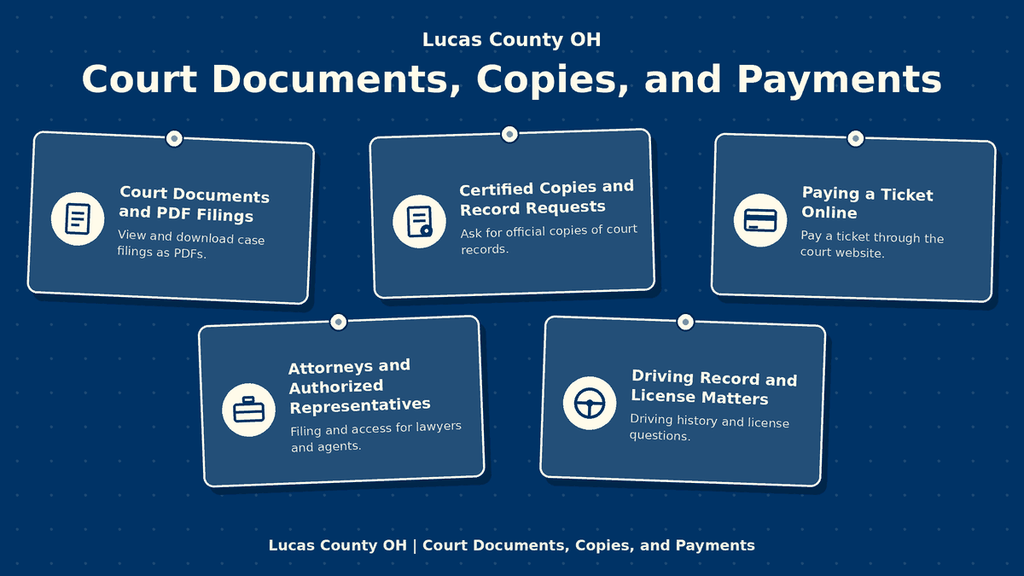
Some docket entries open to a document list, and some documents are viewable as a PDF. Not every entry carries a downloadable file, and a public view may show a docket line without the underlying document. When you need a document for a hearing, an insurance file, or another court, request it from the clerk.
Certified Copies and Record Requests
A certified copy carries the clerk’s seal and proves what the court record contains. Courts charge for certified copies and often for ordinary photocopies, and the court’s published fee schedule sets those amounts. A records request form should state the case number, the party name, and the document you need. The clerk can confirm the case status and payment total while handling the request.
Paying a Ticket Online
Most Ohio courts offer online payment for open traffic cases through their own payment system or a provider working for the court. The ticket’s court decides which system to use, and the payment page shows the case total before you approve a transaction. Third-party payment providers can add a convenience fee, so read the final amount on the confirmation screen. Keep the confirmation number, then check the docket to see the payment posted.
Attorneys and Authorized Representatives
A licensed attorney working an open case often uses the court’s e-filing system rather than the public search, and that system can show filings that are not posted for public viewing. If you have an attorney, ask that office for the case documents and the current status. A party or attorney of record can request sealed records through the court using the procedures the court sets.
Driving Record and License Matters
Court outcomes can affect a driver’s license record and an insurance policy. The Ohio Bureau of Motor Vehicles applies point and suspension rules based on court findings, so use the court record for the facts of the case and the motor vehicle record for the license status. A dismissal or a reduction in the charge can take time to reach that record, which is another reason to check the docket history rather than rely on memory.
Contact Information
Use the clerk’s office for case status checks, record requests, certified copies, and questions about payment postings. Staff can confirm a case number, walk you through a docket entry, and point you to the payment method the court accepts.
- Office: Clerk of Courts, Lucas County
- Address: 700 Adams Street, Toledo, OH 43604
- Phone: 419-213-4484
Frequently Asked Questions
Traffic ticket records let drivers see citations, fines, and case status. Accessing these records helps you verify payments, plan court visits, and keep your driving history clean. Most states host a public portal where you can search by name, license number, or case number. Understanding how to use the portal saves time and avoids unnecessary fees.
How can I view traffic ticket records in Lucas County, Ohio?
Visit the Lucas County online docket page. Enter the driver’s name or license number in the search box. The system lists each citation, the charge, current status, and any balance due. Click a case to see detailed court documents and payment options. No registration is needed, and results appear instantly.
What is the traffic ticket records search for Ohio drivers?
The Ohio traffic ticket records search tool aggregates data from county clerks. After entering a name or ticket number, the tool shows the citation date, offense, court location, and fine amount. It also indicates whether the ticket is paid, pending, or dismissed. Use the tool to confirm a ticket before contacting an attorney.
Can I request a traffic ticket records PDF for a specific case?
Yes. Once you locate the case on the online docket, select the “Download PDF” link. The file includes the citation, court filings, and payment receipt if applicable. Save the PDF for personal records or to share with an employer or insurance company.
How do I verify traffic ticket records and fines before paying?
First, confirm the case number on the docket matches the citation you received. Check the “Balance Due” field for the exact amount. Review any notes about payment deadlines or court dates. If the amount looks wrong, contact the clerk’s office using the phone number listed on the page.
What fees apply when requesting traffic ticket records from the portal?
The online portal itself is free. Some counties charge a small copy fee for printed documents or certified copies, typically $2‑$5 per page. If you need an official record mailed, expect an additional postage charge. Review the fee schedule on the county’s website before submitting a request.